2022 Holy Week
Let’s explore

Introduction
Over two thousand years ago, Jesus Christ, the Son of God, came from heaven to earth in human form. Born in a stable in Bethlehem and raised in Nazareth, He came to teach us the ways of God’s kingdom, to commune with us, to heal the sick, to bring light into a world living in darkness, to set captives free, and most importantly, to save us from sin and mend our broken relationship with God our Father. Jesus did all this through His suffering, death, and resurrection, so that we may have abundant life in Him.
The week in which the suffering of Christ took place is called the Holy Week, spanning from Palm Sunday to Resurrection Sunday. The Holy Week is sometimes called the “Passion Week”.
Many of us think of passion as a “strong emotion” or “strong enthusiasm” as Oxford puts it. However, the word passion also came from the Latin root word “passio”, which means “suffering”.
Therefore, this week is called Passion Week because this is the week when we commemorate Christ’s ultimate ministry of reconciling the world unto Himself. It is a week when we reflect that God, out of His great and immense love toward us, reconciled us to Himself, through His death on the cross and resurrection to life. It is also in this week that Christ fulfilled many of the prophecies that are found in the Old Testament.
Today, let us walk through the most significant days in the Holy Week. We will go through four days – Palm Sunday, Maundy Thursday, Good Friday and Resurrection Sunday.
“All glory, laud and honor, to Thee, Redeemer, King
To whom the lips of children, made sweet hosannas ring
Thou art the King of Israel, Thou David’s royal Son
Who in the Lord’s name comest, the King and Blessed One”
– “All Glory, Laud, and Honor” by Theodulph of Orleans –
Palm Sunday
Jesus’ triumphant entry into Jerusalem
Holy Week begins with what we call “Palm Sunday”, where we commemorate Jesus’ triumphant entry into Jerusalem.
On the Sunday before Jesus’ death, Jesus rode on a donkey, as He entered Jerusalem, fulfilling a prophecy in Zechariah 9:9. A large crowd welcomed him by spreading cloaks and palm branches on the road, shouting praises and hosannas, acknowledging that He was the promised Christ or “Messiah” (meaning “Anointed One” in Greek and Hebrew respectively). This was prophesied in the Old Testament, that Jesus was the One who came in the name of the Lord.
“Rejoice greatly, O Daughter of Zion! Shout, Daughter of Jerusalem! See, your king comes to you, righteous and having salvation, gentle and riding on a donkey, on a colt, the foal of a donkey.” – Zechariah 9:9
“O LORD, save us; O LORD, grant us success. Blessed is he who comes in the name of the LORD. From the house of the LORD we bless you.” – Psalm 118:25-26
The phrase “Hosanna” is actually the Greek translation of the Hebrew imperative “Hoshiana” (הושיעה נא) which means “Save!”.
While the crowd was right in welcoming Jesus, and rejoicing in Him as the promised Savior, not withholding their praises, they had a shallow vision of what He had come to do. The crowd had expected Him to deliver the nation of Israel from their enemies, i.e. the Romans, who were governing their land at that time, and to restore the nation of Israel politically.
Jesus entered the city with a greater rescue plan than what the crowd had in mind. He came to deliver mankind from their sins, which is a greater enemy than the Romans. He came to break the bondages of sins that have hindered mankind from having a right relationship with God. He came to set the people free from the dominion of sin and darkness , to take them into His marvelous kingdom of light.
Even after the crowd had welcomed Him with praises during His entry into Jerusalem, Jesus wept over the city because they had missed the bigger picture of why He had to come.
“As He approached Jerusalem and saw the city, He wept over it and said, ‘If you, even you, had only known on this day what would bring you peace…’” – Luke 19:41-42a
Today, as we reflect on Jesus’ entry into Jerusalem, let us ask ourselves some questions: Do we truly praise and adore Jesus for who He really is, in accordance to Scripture, or do we, like the crowd, worship Him for who we want Him to be? Is Jesus King over every part of our lives, or is He only King in selected areas of our lives?
This account can be found in the following passages:
Matthew 21:1-11
Mark 11:1-10
Luke 19:29-44
John 12:12-19
Maundy Thursday
The Last Supper and treacherous act of Judas
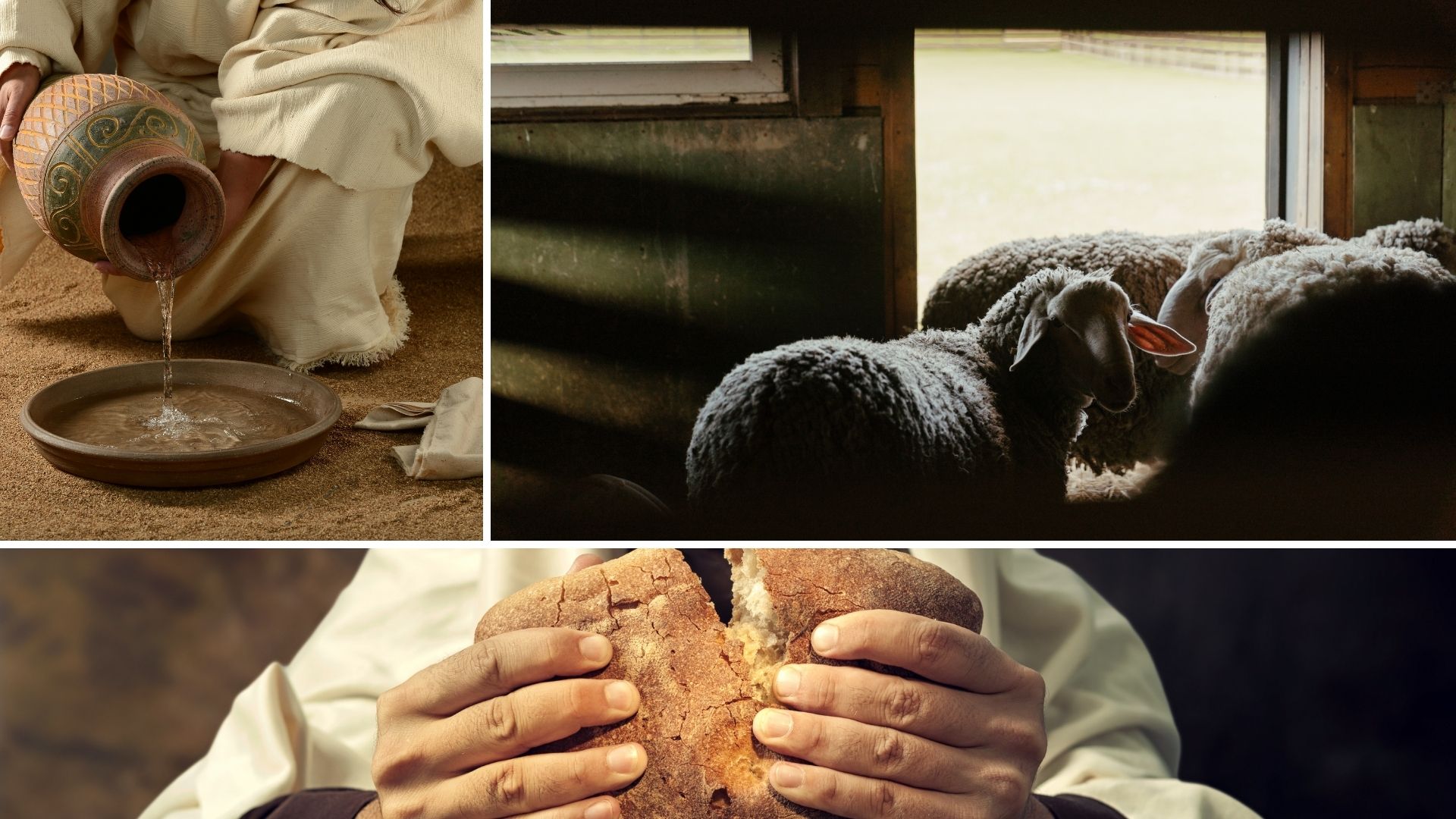
On Maundy Thursday, which is also traditionally the first day of the Feast of Unleavened Bread, according to Jewish culture, it was customary to sacrifice the Passover lamb. It was on this important Thursday that Jesus and His disciples shared their Last Supper together.
“The Lord Jesus, on the night He was betrayed, took bread, and when He had given thanks, He broke it and said, ‘This is My body, which is for you; do this in remembrance of Me.’ In the same way, after supper He took the cup saying, ‘This cup is the new covenant in My blood; do this, whenever you drink it, in remembrance of Me.’ For whenever you eat this bread and drink this cup, you proclaim the Lord’s death until He comes.” – 1st Corinthians 11:23b-26
“…whoever wants to become great among you must be your servant, and whoever wants to be first must be your slave – just as the Son of Man did not come to be served, but to give His life as a ransom for many.” – Matthew 20:26b-28
“O LORD, save us; O LORD, grant us success. Blessed is he who comes in the name of the LORD. From the house of the LORD we bless you.” – Psalm 118:25-26
What is significant about the Lord’s Supper is that Jesus and His disciples were having a Passover meal. During this meal, Jesus gave His disciples the mandate to remember Christ’s broken body and shed blood that sufficed for the remission of all sins, in order to be reconciled to God our Father. In the same way that the blood of the Passover lamb protected the houses of Israel during the time of Exodus, the blood of Christ, the Lamb of God, now delivers us from the law of sin and death.
Today, this sacrament is widely practiced and celebrated in churches worldwide. As we actively participate in the Lord’s Supper in our own communities, may we reflect deeper on what Christ went through to give us salvation and to set us free from sin, slavery and condemnation.
On the same day, Jesus performed a humbling act of washing the feet of His disciples. This humble act, which was normally done by servants,was done by the Master, Jesus Himself, instead. It was done as a demonstration of Jesus’ love for His disciples, to foreshadow His self-sacrifice on the cross, and to convey the truth that those who claim to follow Him must humbly serve one another, putting their own interests behind them. By washing His disciples’ feet, Jesus demonstrated the perfect example of humility, while still knowing that His disciples struggled with a desire to be great.
“Now that I, your Lord and Teacher, have washed your feet, you also should wash one another’s feet. I have set you an example that you should do as I have done for you. I tell you the truth, no servant is greater than his master, nor is a messenger greater than the one who sent him.” – John 13:14-16
By this, Jesus gives a new command, ( “Maundy” comes from the Latin word “mandatum” which means “command” or “mandate” ) to love and serve one another as Christ loved us, through His sacrifice on the cross, and through the washing of feet.
“A new command I give you: Love one another. As I have loved you, so you must love one another. By this all men will know that you are My disciples, if you love one another.” – John 13:34-35
Many significant events happened on Maundy Thursday. Not only did Jesus share the Passover meal and commune with His disciples, He washed their feet; and then He retreated to the Garden of Gethsemane and prayed passionately. It was also on that very evening that Jesus was betrayed by Judas, one of His disciples, and arrested.
As we reflect upon what happened on Maundy Thursday, may we never lose sight of what great sacrifices Jesus took to humble Himself to go to the cross, for on that night before, he so passionately cried out in prayer for strength to God to see Him through.
This account can be found in the following passages:
Matthew 21:1-11
Mark 11:1-10
Luke 19:29-44
John 12:12-19
Good Friday
Good Friday is the day when Christians commemorate the most pivotal day in world history. It was on this day that Christ willingly suffered and died on the cross as the ultimate sacrifice for our sins.
After Jesus’ arrest, He was taken to the Sanhedrin. This is where Jesus was beaten and spat upon, when He was questioned about His authority as the Son of God, by Annas and Caiaphas, the Jewish high priests. At the same time, Peter denied Jesus three times, when he was questioned by the people in the courtyard, just as Jesus foreknew.
After the trial, Jesus was taken to Pilate, where the crowd that once welcomed Jesus into Jerusalem with praises, now called for His crucifixion. Pilate, who himself found no fault in Jesus, eventually gave in to the pressure of the crowd to have Him crucified, washing his hands before them and saying, “I am innocent of this man’s blood. It is your responsibility!” (Matthew 27:24b)
Under the Roman rule, crucifixion was the cruelest and the most shameful form of death, a penalty reserved for criminals and slaves. Jesus, innocent and blameless, was flogged with multiple stripes, given the crown of thorns, forced to carry His own cross, and had His hands and feet nailed upon it. He endured the taunts and mockery of many and suffered the most excruciating and shameful death in human history; even though He, in all His authority, did not have to let them do that to Him.
“He was oppressed and afflicted, yet He did not open his mouth; He was led like a lamb to the slaughter, and as a sheep before her shearers is silent, so He did not open His mouth.” – Isaiah 53:7
Now, you may wonder why this day is called “Good Friday”, when it was filled with so much suffering and sorrow? Especially anyone who has watched “The Passion of Christ”, where the final hours of Jesus were shot in vivid detail, what could be so “Good” about “Good Friday” ?
Isaiah 53:4-6 says this: “Surely He took up our infirmities and carried out sorrows, yet we considered Him stricken by God, smitten by Him, and afflicted. But He was pierced for our transgressions, He was crushed for our iniquities; the punishment that brought us peace was upon Him, and by His wounds we are healed. We all, like sheep, have gone astray, each of us has turned to his own way; and the LORD has laid on Him the iniquity of us all.” – Isaiah 53:4-6
The Bible says that there is no one righteous, and that all have turned away from God (Romans 3:10-11; Isaiah 53:6). Living for God requires sinless perfection, which is not only difficult, but impossible for anyone to do within our own strength. No good deed that we could have done, or can ever do, can even meet God’s standards of righteousness. We all need to be forgiven. At this point, you may wonder, why did God have to send His Son, Jesus, to go through the most excruciating suffering and death, for us to be forgiven?
The Bible says that the penalty of sin is death (Ezekiel 18:20; Romans 6:23a) i.e. eternal separation from God. Sin causes our relationship with God to be broken, just as it causes our relationship with others to be broken. To be forgiven, it costs one his life (Hebrews 9:22; Leviticus 17:11), and that cost needs to be paid. God, being a righteous God, simply could not ignore or overlook our sin without payment.
Instead of leaving us to face this high cost ourselves, God came in the form of Jesus Christ, the one who is perfect, the spotless Lamb of God, to pay that price for us. Jesus said in John 10:
“I am the good shepherd; I know My sheep and My sheep know Me – just as the Father knows Me and I know the Father – and I lay down My life for the sheep…No one takes it from Me, but I lay it down of My own accord. I have authority to lay it down and authority to take it up again.” – John 10:14-15, 18a.
D.A. Carson wrote,
“It was not nails that held Jesus to that wretched cross; it was His unqualified resolution, out of love for His Father, to do His Father’s will – and it was His love for sinners like me.”
Jesus died as the complete sacrifice for our sins, so that we may have eternal life in God. He endured a brief separation from God on that cross (Matthew 27:46), so that we can have a perfect and abundant relationship with Him (Matthew 27:51a). When He said on the cross, “It is finished.”, He conquered sin and death, and made a way for us to come to God confidently and freely (Hebrews 10:19-22).
By believing and receiving Jesus’ sacrifice on the cross; and knowing that His blood was shed for our sins, we are saved and made right with God – we now can have access to God without having to work through acts of righteousness to gain His favour – this is exactly what’s “GOOD” about “Good Friday”!
This account can be found in the following passages:
Matthew 26:14-27:66
Mark 14:12-15:17
Luke 22-23
John 18-19
“Behold the man upon a cross, my sin upon His shoulders
Ashamed, I hear my mocking voice call out among the scoffers
It was my sin that held Him there, until it was accomplished
His dying breath has brought me life, I know that it is finished.”
– “How Deep the Father’s Love for Us” by Stuart Townend –
Resurrection Sunday
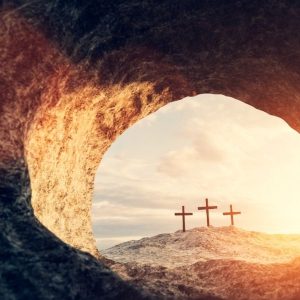
“He is not here; He is risen! Remember how He told you, while He was in Galilee: ‘The Son of Man must be delivered into the hands of sinful men, be crucified and on the third day be raised again.’” – Luke 24:6-7


“Christ the Lord is risen today, Alleluia!
Sons of men and angels say, Alleluia!
Raise your joys and triumphs high, Alleluia!
Sing ye heavens and earth reply, Alleluia!”
– “Christ the Lord is Risen Today” by Charles Wesley –
Finally, we have come to the day we’ve all been waiting for. Resurrection Sunday – more popularly known as “Easter” – is the day we celebrate the victorious resurrection of Jesus Christ from death. Early on the third morning after His death, Mary Magdalene and two other women went over to the tomb to anoint Jesus’ body; they found that the stone was rolled away, and that the tomb was empty. Two angels appeared to them telling them that Jesus had risen and was no longer in the tomb. The disciples, too, went to see the empty tomb, wondering what had happened to Jesus’ body.
Jesus, in His risen self, first appeared to Mary Magdalene and the women. He then appeared to two disciples on their way to Emmaus, to the eleven disciples, and to many more (Acts 1:3; 1 Corinthians 15: 6).
“He presented himself alive to them after his suffering by many proofs, appearing to them during forty days and speaking about the kingdom of God.” – Acts 1:3
Jesus’ resurrection from death gives us hope and a reason to celebrate, because it is through His resurrection power that we can live a victorious life over sin when we are tempted. It is through His resurrection that Jesus conquered over darkness, death and the grave. It is through His resurrection that we can find new meaning and new hope in our daily lives, as we face uncertainties in the days ahead; with the hope that we will one day be raised with Christ, and be completely transformed in His likeness.
“Because He lives, I can face tomorrow
Because He lives, all fear is gone
Because I know, He holds the future
And life is worth the living just because He lives.”
– “Because He Lives” by Bill and Gloria Gaither –
The Bible says in Romans 10:
“That if you confess with your mouth, ‘Jesus is Lord’, and believe in your heart that God raised Him from the dead, you will be saved……Everyone who calls on the name of the Lord will be saved.” – Romans 10:9, 13
The death and resurrection of Jesus Christ, therefore, calls us to trust in Him through faith for our salvation, to confess our sins before Him for our forgiveness, and to enthrone Him as Lord and Savior in our hearts, so that we might live a life that pleases Him as He guides us. Romans 6:4 says,
“We were therefore buried with Him through baptism into death in order that, just as Christ was raised from the dead through the glory of the Father, we too may live a new life.” – Romans 6:4 .
In living this new life in Christ, we can then put off our old (sinful) selves, and put on our new selves, created to be like God in true righteousness and holiness (Ephesians 4:22-24). Let us respond to God with a sacrifice of praise through our lips and our conduct (Hebrews 13:15).
“When the perishable has been clothed with the imperishable, and the mortal with immortality, then the saying that is written will come true: ‘Death has been swallowed up in victory.’
‘Where, O death is your victory? Where, O death, is your sting?’
The sting of death is sin, and the power of sin is the law. But thanks be to God! He gives us victory through our Lord Jesus Christ.” – 1st Corinthians 15:54-57
And Oh! What joy to know His resurrection life within and living among us indeed!
This account can be found in the following passages:
Matthew 28:1-13
Mark 16:1-20
Luke 24:1-49
John 20:1-31
Conclusion
A hymn written by Horatius Bonas, a Scottish churchman and a poet summed up the season perfectly:
Not what these hands have done can save my guilty soul;
Not what my toiling flesh has borne can make my spirit whole.
Not what I feel or do can give me peace with God;
Not all my prayers and sighs and tears can bear my awful load.
Thy work alone, O Christ, can ease this weight of sin;
Thy blood alone, O Lamb of God, can give me peace within.
Thy love to me, O God, not mine, O Lord, to Thee,
Can rid me of this dark unrest and set my spirit free.
Thy grace alone, O God, to me can pardon speak;
Thy power alone, O Son of God, can this sore bondage break.
No other work, save Thine, no other blood will do;
No strength, save that which is divine, can bear me safely through.
“Not What These Hands Have Done”, Horatius Bonar, (1808-1889)
More ways to experience the Holy Week


Above All by Simon Peter (Michael W. Smith Cover)
Above all powers, above all kings
Above all nature and all created things
Above all wisdom and all the ways of man
You were here before the world began
Above all kingdoms, above all thrones
Above all wonders the world has ever known
Above all wealth and treasures of the earth
There’s no way to measure what You’re worth
Crucified, and laid behind a stone
You lived to die, rejected and alone
Like a rose trampled on the ground
You took the fall and thought of me
Above all, above all
Above all powers, above all kings
Above all nature and all created things
Above all wisdom and all the ways of man
You were here before the world began
Above all kingdoms, above all thrones
Above all wonders the world has ever known
Above all wealth and treasures of the earth
There’s no way to measure what You’re worth
Crucified, and laid behind a stone
You lived to die, rejected and alone
Like a rose trampled on the ground
You took the fall and thought of me
Above all
Oh, You were crucified, and laid behind a stone
You lived to die, rejected and alone
Like a rose trampled on the ground
You took the fall and thought of me
Above all
Like a rose trampled on the ground
You took the fall and thought of me
Above all
Use of video with permission by @simonwaimusic. For more praise & worship cover, subscribe to Simon’s channel.
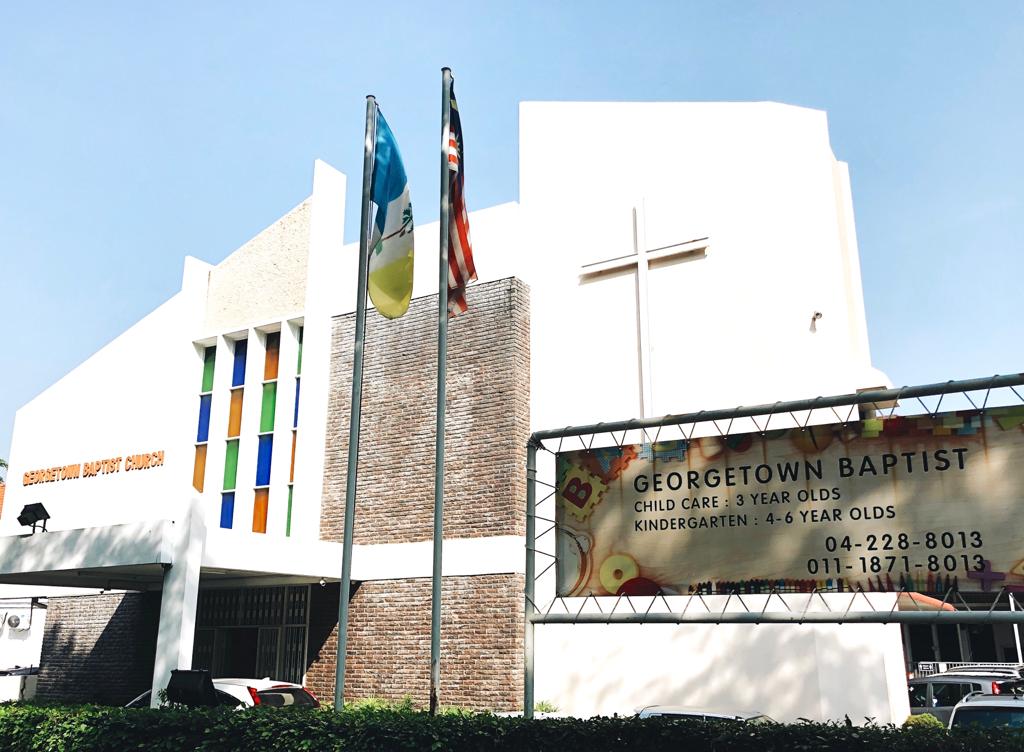
Worship together @ IMPACT
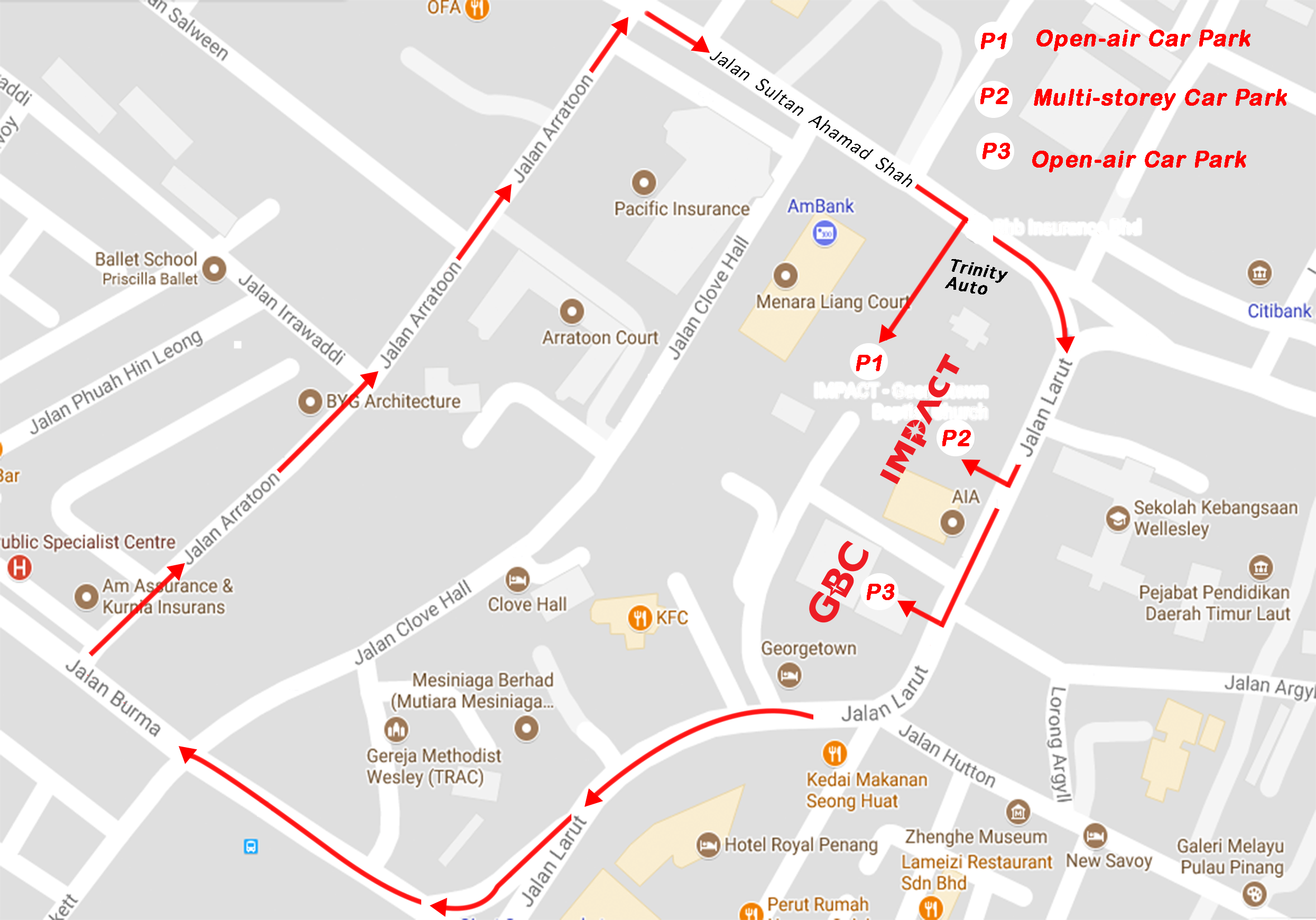
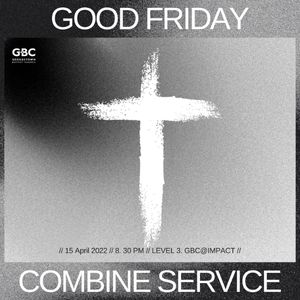
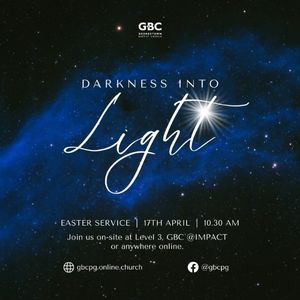
Join us for Easter and Good Friday Service. To ensure safe worship experience, read our SOP guide. Limited parking bays available inside IMPACT.
For other enquiries, please use the Facebook Messenger widget to reach out to our Social Media team.